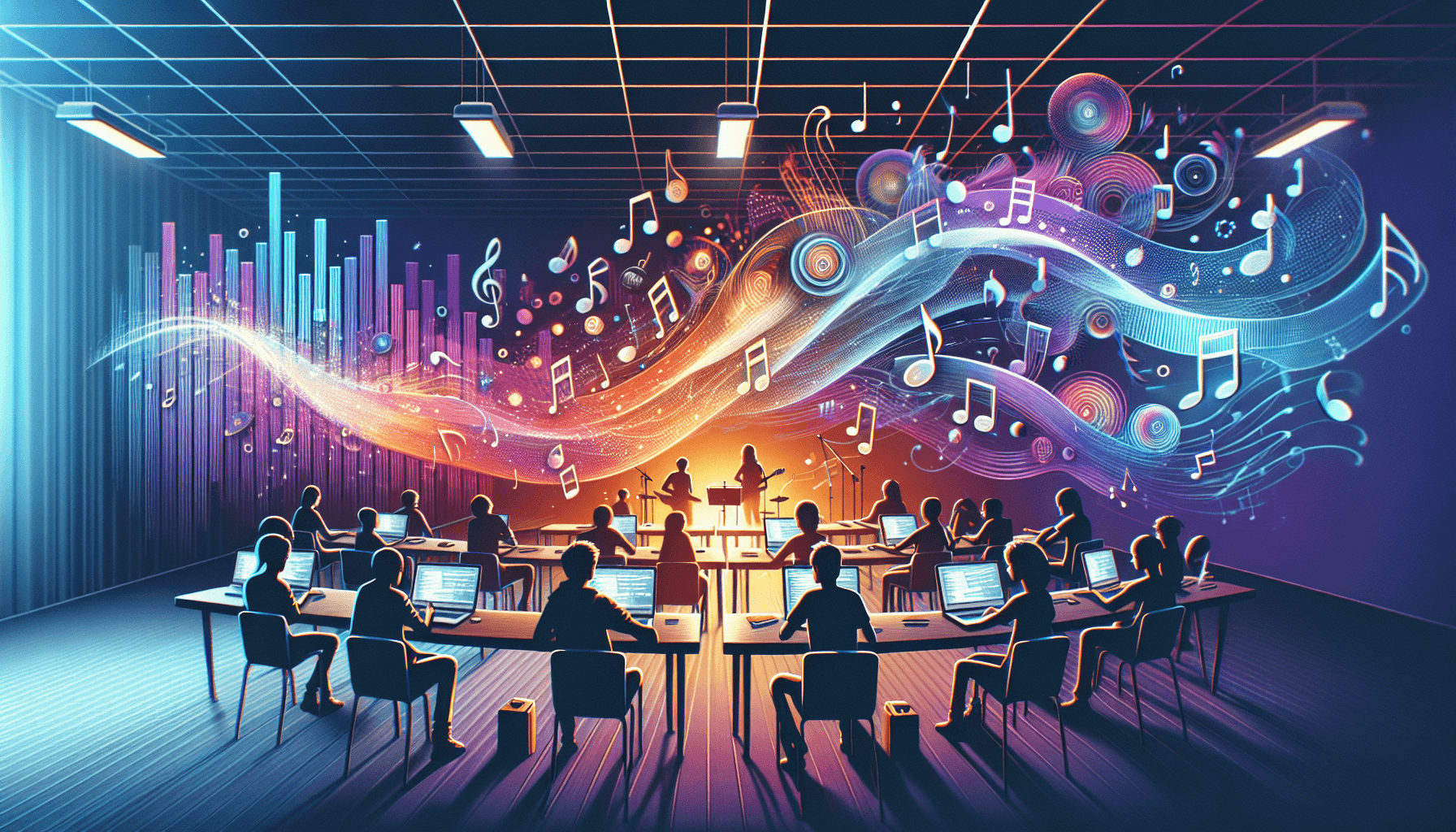
Vibe Coding: Innovative Problem Solving in Music Education
Exploring a novel method that reshapes learning through sound and technology
Vibe Coding: Innovative Problem Solving in Music Education
In the ever-evolving landscape of education, innovation often emerges in the most unexpected ways. Vibe coding is one such example, bringing a fresh perspective to how music education engages with technology. This innovative approach reimagines how students learn music by synergizing sound, coding, and creativity.
A New Beat in Education
Vibe coding, pioneered by educational technologists and music educators, introduces students to the foundational concepts of coding through music composition. One notable implementation is at the Berklee College of Music, where educators experimented with integrating coding exercises into music theory classes. Here, students explore programming concepts while creating music, allowing them to experience the parallels between coding and musical composition.
By engaging with vibe coding, learners are exposed to logical thinking processes inherent in programming. This method encourages them to think critically about both the structure of music and the algorithms that can generate it. The methodology behind vibe coding involves using platforms like Sonic Pi, a live coding music synthesizer, which allows users to write code that generates music in real-time.
Historical Context and Evolution
Historically, music and technology have shared a symbiotic relationship. The introduction of electronic instruments in the early 20th century marked the beginning of this integration, leading to the development of synthesizers and digital audio workstations. Vibe coding represents the next evolution, where the very act of creating music becomes a platform for learning coding skills.
The methodology at Berklee was influenced by the broader movement of STEAM education (Science, Technology, Engineering, Arts, and Mathematics), which emphasizes the integration of arts into the traditional STEM fields. Vibe coding finds its place within this framework, offering a novel way to engage students in both music and technology.
What Makes Vibe Coding Innovative?
Unlike conventional music education, which often focuses on performance and theory, vibe coding introduces a systematic approach to understanding both music and programming. This method requires students to apply problem-solving skills as they decode the language of music and programming.
A key innovation is the way it demystifies programming for students who might otherwise be intimidated by the complexity of coding. By associating code with the creative process of making music, learners find coding more accessible and relatable.
Furthermore, vibe coding fosters a collaborative environment. Students work together to solve coding challenges, analyze each other's compositions, and refine their approaches. This community-driven aspect enhances their learning experience and builds transferable skills, such as teamwork and communication.
Transferable Principles for Problem Solving
The principles behind vibe coding extend beyond music and programming. They offer valuable insights into effective problem-solving strategies applicable in various contexts:
- Cross-Disciplinary Thinking: Vibe coding exemplifies the power of interdisciplinary approaches. Solving complex problems often requires drawing from multiple fields, as seen in the fusion of music and technology.
- Iterative Learning: Coding by nature is an iterative process, much like learning a musical instrument. Students learn through trial and error, refining their skills with each attempt, which reflects the broader principle of iterative problem-solving.
- Creativity and Innovation: Encouraging creative solutions fosters innovation. Vibe coding allows students to explore unique musical compositions, which parallels the need for creative thinking in problem-solving.
- Collaboration: Working together enhances problem-solving capabilities. In vibe coding, peer feedback and collaborative projects enable students to learn from diverse perspectives.
Practical Takeaways
Educators and innovators looking to implement similar methodologies can draw several practical lessons from vibe coding:
- Embrace Interdisciplinary Education: Encourage students to explore the intersections of various fields, fostering a broader understanding and innovative thinking.
- Leverage Technology Creatively: Use technology as a means to enhance learning experiences, making complex subjects more accessible and engaging.
- Cultivate a Collaborative Environment: Foster a sense of community where students can work together, share insights, and learn from one another.
- Encourage Iterative Learning: Promote a culture where trial and error is seen as a valuable learning process, helping students develop resilience and adaptability.
Vibe coding stands as a testament to the potential of innovative problem-solving in education. By transforming the way we approach learning, it reveals the possibilities that arise when technology and creativity harmonize in unexpected ways.
Written by
Kaairo TeamExpert insights on AI-powered problem-solving assessments and innovative hiring practices.
Learn more about us →Related Articles
Cross-Cultural Innovation: Lessons from the Grameen Bank
Discover how the Grameen Bank's microfinance model showcases a systematic, cross-cultural approach to innovation. Learn transferable problem-solving skills.

Circular Economy Innovations: A Global Case Study on Systematic Solutions
Discover a global case study on systematic solutions in the circular economy, showcasing innovative problem-solving techniques.
Cross-Cultural Innovation: The Mondragón Cooperative Model
Discover how the Mondragón Cooperative in Spain exemplifies cross-cultural innovation, fostering problem-solving and collective decision-making.
Ready to Test Your Problem-Solving Skills?
Take the Kaairo daily challenge and discover how you compare to thousands of problem solvers worldwide.
Start Today's Challenge