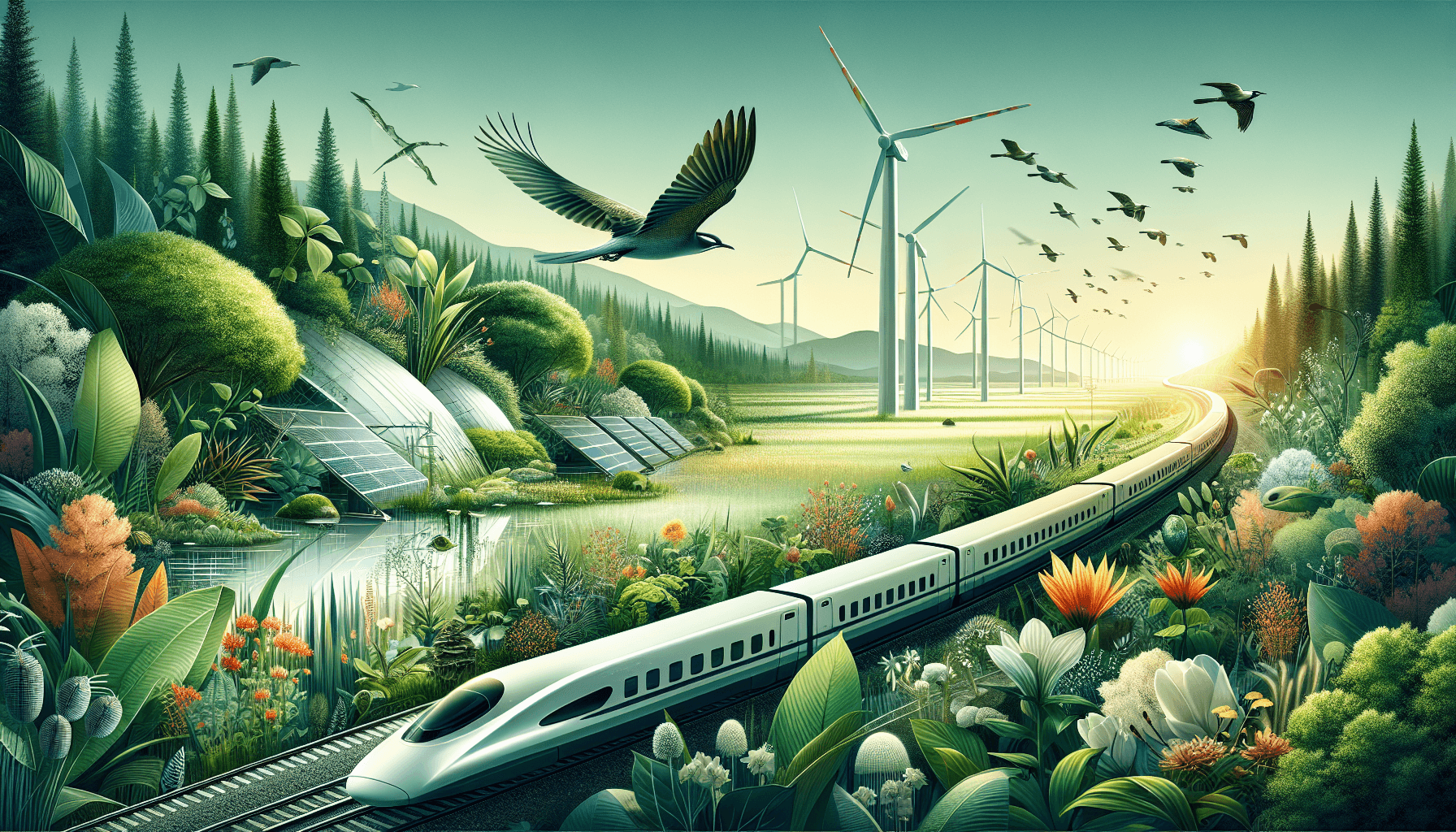
Biomimicry in Engineering: The Shinkansen Bullet Train's Inspiration from Nature
Exploring how engineers use nature-inspired designs for innovation
Biomimicry in Engineering: Learning from Nature
Biomimicry, the practice of drawing inspiration from nature to innovate and solve complex human problems, has seen transformative applications in engineering design. This approach is more than a trend; it is a systematic process that involves observing, emulating, and applying nature's time-tested patterns and strategies. One of the most compelling examples of biomimicry in engineering is the development of Japan's Shinkansen Bullet Train, inspired by the aerodynamic properties of a bird.
A Historical Context of Biomimicry
The concept of biomimicry isn't new. Humans have always looked to nature for inspiration, evident in the invention of flight engineered by observing birds. However, the formalization of biomimicry as a systematic approach emerged prominently in the late 20th century. Pioneering figures like Janine Benyus popularized the discipline, emphasizing the need to study and mimic the natural world to sustainably solve human challenges.
The Shinkansen Bullet Train: A Case Study
In the early 1990s, the Shinkansen Bullet Train in Japan faced a significant problem: noise pollution. As the train exited tunnels at high speeds, it produced a loud boom, disturbing nearby residents and wildlife. This noise issue stemmed from the sudden change in air pressure.
Eiji Nakatsu, an engineer and avid birdwatcher, observed the kingfisher, a bird known for its ability to dive into water with minimal splash. Nakatsu noticed the bird's beak was perfectly shaped to seamlessly transition between air and water. He hypothesized that a similar design could help the Shinkansen transition between air inside and outside tunnels more smoothly.
The Methodology and Thinking Process
The process of applying biomimicry here involved several steps:
- Observation: Nakatsu spent considerable time studying the kingfisher's flight and diving mechanics. This step was crucial to understand the exact natural principles at play.
- Analysis: The team conducted a thorough analysis of the kingfisher's beak design, focusing on its shape, material composition, and functionality.
- Emulation: Engineers translated these observations into a design for the train's nose. They developed a prototype and tested it extensively, iterating on the design to optimize performance.
- Implementation: Once the design was validated through simulations and wind tunnel tests, it was implemented in the train's structure.
The result was a train that not only reduced tunnel exit noise but also consumed 15% less electricity while traveling 10% faster.
What Made This Approach Innovative?
Conventional solutions to the noise problem might have focused solely on engineering fixes such as sound barriers or tunnel modifications. Instead, Nakatsu's team employed a creative and holistic approach, drawing on nature's own innovations. By integrating biology and engineering, they developed a quieter, more efficient train-a solution that was both innovative and sustainable.
Transferable Principles for Problem Solving
The success of the Shinkansen redesign offers several principles that can be applied to other problems:
- Interdisciplinary Collaboration: Solutions often require crossing traditional boundaries, as seen with Nakatsu blending biology and engineering.
- Systematic Observation: Carefully studying existing natural solutions can provide insights that are not immediately apparent.
- Iterative Testing and Improvement: Developing prototypes and iterating through testing ensures that solutions are refined and effective.
- Sustainability Focus: Nature-inspired designs often lead to more sustainable solutions, reducing environmental impact.
Practical Takeaways for Innovators
To incorporate biomimicry and nature-inspired thinking into your problem-solving toolkit, consider these strategies:
- Expand Your Knowledge Base: Familiarize yourself with various natural systems and organisms. This can provide a broader range of inspiration.
- Observe and Document: Spend time in natural settings, observe living organisms, and document your findings. These observations can spark innovative ideas.
- Engage with Experts: Collaborate with biologists, ecologists, or other experts who can offer insights into natural processes applicable to your field.
- Prototype and Test: Develop models of your ideas and test them rigorously to ensure they meet your desired outcomes.
Biomimicry invites us to rethink traditional approaches by leveraging the genius of nature. As we increasingly seek sustainable and effective solutions, this methodology will undoubtedly play a pivotal role in future innovations.
Written by
Kaairo TeamExpert insights on AI-powered problem-solving assessments and innovative hiring practices.
Learn more about us →Related Articles
Biomimicry: Nature's Blueprint for Innovative Design
Discover how biomimicry is driving sustainable innovations by emulating nature's time-tested patterns.

Innovative Problem Solving Through Open Source Collaboration
Discover how open source collaboration drives innovation worldwide, focusing on systematic approaches and transferable skills.
Frugal Innovation: Ingenious Solutions from Emerging Markets
Explore how frugal innovation in emerging markets offers systematic solutions, exemplified by the Jaipur Foot prosthesis.
Ready to Test Your Problem-Solving Skills?
Take the Kaairo daily challenge and discover how you compare to thousands of problem solvers worldwide.
Start Today's Challenge